What 3D Filament is Heat-Resistant? A Complete Guide to High-Temp 3D Printing
Master heat-resistant 3D printing by understanding Tg vs HDT. Learn why materials like ASA, PC, and Nylon require advanced hardware such as enclosures and hardened nozzles for success.

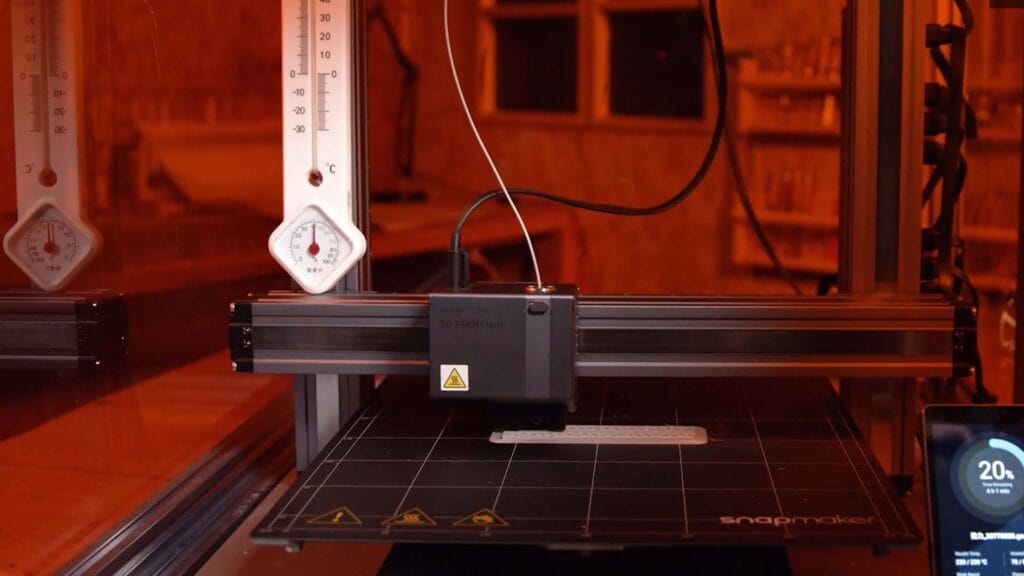
Picture this: You’ve spent twelve hours meticulously 3D printing a custom phone mount for your car's dashboard. It looks flawless. You install it, park your car under the blazing mid-July sun, and run into the store. When you return, your beautiful, functional print has drooped into a sad, melted puddle of plastic.
If you've been 3D printing for any length of time, you've likely experienced a tragedy just like this. The culprit? Standard PLA filament.
While everyday printing materials are fantastic for desktop trinkets and indoor prototypes, they simply cannot survive the harsh realities of real-world temperatures. Whether you are fabricating under-the-hood automotive parts, custom enclosures for hot electronics, or outdoor fixtures that will bake in the summer sun, you need materials built to withstand the heat.
So, what 3D filament is heat-resistant?
In this comprehensive guide, we are diving deep into the world of thermal-resistant polymers. We'll break down the exact metrics that matter, rank the best materials for your specific needs, and reveal the hardware secrets required to successfully tame high-temp 3D printer filament.
What Makes a 3D Filament Heat-Resistant?
When searching for a heat-resistant filament, many makers make the critical mistake of only looking at the "printing temperature" listed on the spool. Let’s get one thing straight right away: the temperature required to melt the filament inside your 3D printer's nozzle is entirely different from the ambient temperature your finished part can withstand in the real world.
To determine if a filament is right for a hot environment, you need to understand three critical metrics:
Glass Transition Temperature (Tg): The Most Crucial Metric
The Glass Transition Temperature is the exact thermal point where a solid, rigid plastic begins to soften, warp, and turn rubbery. This is the true thermal ceiling for your 3D prints. If you print a part in PLA (which has a Tg of around 140°F / 60°C) and put it in a hot car, it will warp because the cabin temperature has exceeded the material's Tg. For high-temperature applications, you must choose a filament with a Tg significantly higher than your part's working environment.
Heat Deflection Temperature (HDT): Real-World Performance
While Tg tells you when the material physically softens, the Heat Deflection Temperature (HDT) tells you the temperature at which a printed part will start to deform under a specific physical load or weight. This is a highly practical metric for functional engineering parts. A mechanical gear might have a high Tg, but its HDT will tell you if it can maintain its precise shape while actively bearing a load inside a hot engine bay. If you are designing structural components and wondering how strong 3D printed parts can truly be, combining high HDT with the right design is the secret.
Melting Temperature (Tm): The Hardware Requirement
The melting temperature is the point at which the filament turns into a flowable liquid. While this doesn't dictate how heat-resistant your final printed object will be, it does dictate the hardware you need to print it. True high-temp filaments require advanced 3D printers with high-temperature hot ends capable of reaching 572°F (300°C) or more.
The Baseline: Why Standard Filaments Melt Under Pressure
Before we get to the heavyweights, it helps to understand why our daily drivers fail when the heat turns up.
- PLA (Polylactic Acid): The undisputed king of ease-of-use. It prints beautifully and comes in endless colors. However, with a Glass Transition Temperature of roughly 140°F (60°C), PLA will literally deform in a hot car, in a dishwasher, or even sitting over a hot radiator. Keep PLA indoors and out of the sun.
- PETG (Polyethylene Terephthalate Glycol): Often hailed as the bridge between PLA and ABS, PETG offers better impact resistance and a slightly higher Tg of about 175°F (80°C). While it survives hot summer days better than PLA, it is still not considered a true heat-resistant filament for demanding engineering or automotive applications.
The Mid-Tier Warriors: Accessible Heat-Resistant Filaments
If you are graduating from desktop trinkets to functional, real-world parts, these are the materials you'll want to master first. They offer a massive leap in thermal stability.
ABS (Acrylonitrile Butadiene Styrene)
ABS is the legacy engineering plastic. It’s the exact same tough material used to manufacture Lego bricks and heavy-duty tool housings.
- Heat Resistance: With a Tg of roughly 221°F (105°C), ABS is incredibly resilient. It can easily withstand boiling water temperatures and the interior of a baking hot vehicle without breaking a sweat.
- The Catch: ABS is notorious for shrinking as it cools. Dialing in the correct ABS filament temperature is crucial. If you print it on an open-frame bed-slinger printer, the ambient room temperature will cool the print too quickly, causing severe warping and layer splitting.
ASA (Acrylonitrile Styrene Acrylate)
Think of ASA as ABS's slightly more sophisticated, outdoorsy sibling. It offers identical, if not slightly better, mechanical and thermal properties compared to ABS, but with one massive superpower: UV resistance.
- Heat Resistance: Tg of roughly 212°F to 221°F (100°C - 105°C).
- The Verdict: If you are printing outdoor sensor housings, garden equipment replacements, or exterior car trim that will be exposed to both brutal sunlight and high heat, ASA is arguably the best mid-tier material on the market.
The Heavyweights: True High Temp 3D Printer Filament
When mid-tier isn't enough—when you are printing parts that will live inside engine bays, act as custom HVAC ducting, or serve as manufacturing jigs—you need industrial-grade polymers. These are the true kings of heat resistance.
Polycarbonate (PC)
Polycarbonate is the stuff bulletproof glass and riot shields are made of. In the 3D printing world, it is often considered one of the strongest 3D printer filaments available, renowned for its extreme impact resistance and phenomenal thermal properties.
- Heat Resistance: Depending on the specific blend, PC boasts a staggering Tg ranging from 230°F to 302°F (110°C - 150°C).
- The Catch: PC is notoriously difficult to print. It requires blistering hot nozzle temperatures (often 518°F to 572°F+ / 270°C - 300°C+), a very hot build plate, and a strictly controlled, heated enclosure to prevent it from warping forcefully enough to rip chunks out of your glass build plate.
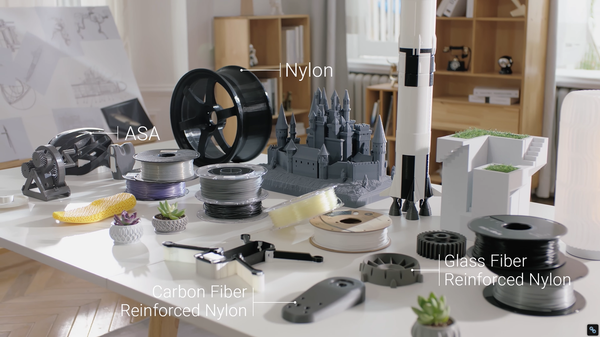
Nylon (Polyamide / PA)
Nylon is the go-to material for parts that need to endure relentless friction and wear, such as custom gears, hinges, and living hinges.
- Heat Resistance: Nylon is unique. Its raw Tg isn't exceptionally high, but its Heat Deflection Temperature (HDT) is excellent, especially after the printed part has been "annealed" (baked in an oven to relieve internal stress).
- The Catch: Nylon is highly hygroscopic, meaning it acts like a sponge for moisture in the air. You absolutely must dry Nylon in a filament dehydrator before and during printing; otherwise, the moisture will boil inside the nozzle, ruining the print.
Fiber-Filled Composites (PA-CF, PC-CF)
To create the ultimate high-temp 3D printer filament, material scientists take high-performance polymers like Nylon (PA) or Polycarbonate (PC) and inject them with microscopic strands of Carbon Fiber (CF) or Glass Fiber (GF).
- Heat Resistance: The chopped fibers act as a structural skeleton inside the plastic, drastically reducing warping and massively increasing the Heat Deflection Temperature. A quality PA-CF (Carbon Fiber Nylon) part can easily withstand operating environments exceeding 302°F (150°C) without deforming.
- The Verdict: This is the pinnacle of desktop 3D printing. These composite materials yield gorgeous, matte-finish parts that rival machined aluminum in strength and heat resistance.
Quick Reference: Heat-Resistant Filaments Compared
To help you make the best choice for your next high-temperature project, here is a quick breakdown of the materials we've covered:
Hardware Matters: How to Successfully Print High-Temp 3D Printer Filament
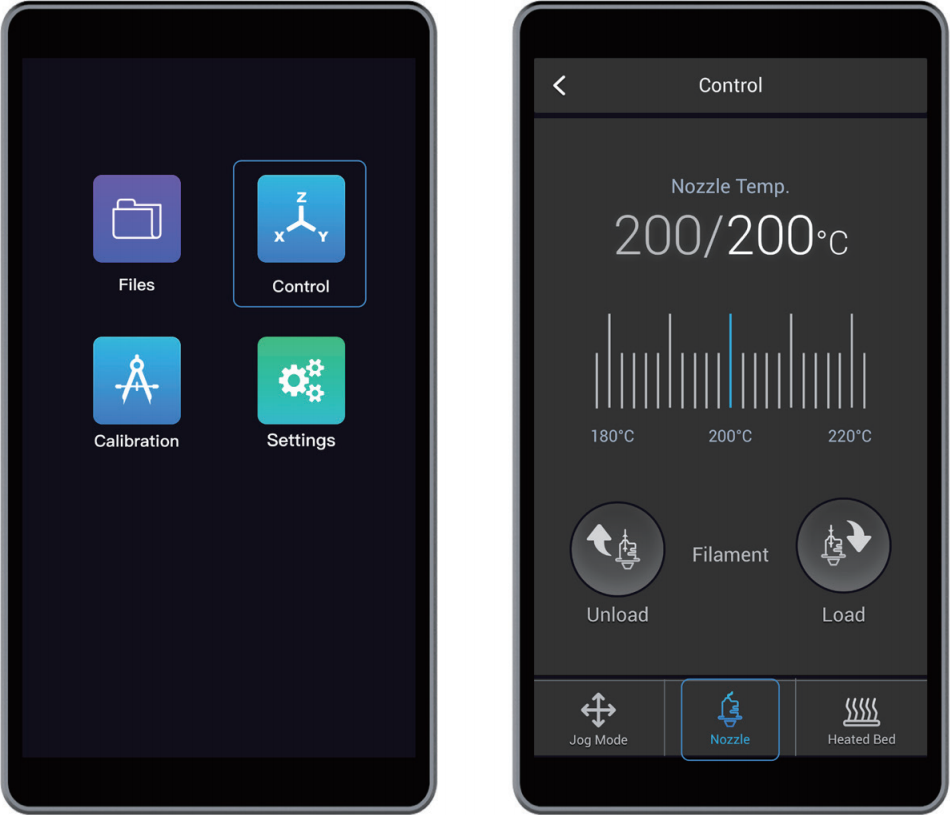
Knowing that 3D filament is heat-resistant is only half the battle. The other half is having the hardware capable of taming these demanding materials.
You simply cannot print Polycarbonate or ASA on a basic, open-frame beginner printer. High-temperature materials require a specific set of tools to succeed:
- High-Temperature Hot Ends: Printing PC or PA-CF requires a nozzle that can comfortably and safely reach 572°F (300°C). Standard PTFE-lined hot ends will melt and release toxic gases at these temperatures. You need an "All-Metal" hot end.
- Hardened Steel Nozzles: If you plan on printing carbon fiber or glass fiber composites, you must upgrade your nozzle. Those tiny fibers are incredibly abrasive and will destroy a standard brass nozzle in a matter of hours.
- A Heated Bed: A bed capable of reaching 212°F to 230°F (100°C - 110°C) is mandatory to ensure initial layer adhesion for materials like ABS and PC.
- A Fully Enclosed Chamber (The Secret Weapon): This is non-negotiable. Materials with high glass transition temperatures shrink rapidly when exposed to cool room air. If you don't trap the heat around the print, it will warp, peel off the bed, and fail.
This is where having the right machine changes everything. If you are serious about printing functional, high-temperature parts, you need hardware engineered for the task.
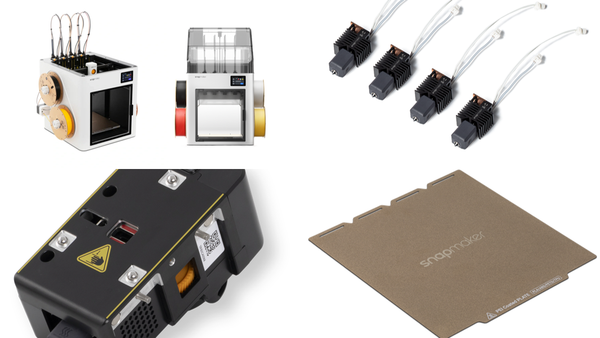
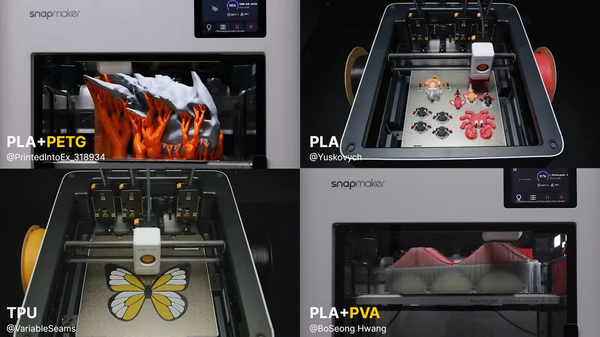
Enter the Snapmaker U1. Designed to bridge the gap between desktop 3D printing and industrial-grade fabrication, the U1 is built from the ground up to tame demanding materials. With quick-swap toolheads featuring nozzles capable of reaching 572°F (300°C) and a high-precision heated bed that hits 212°F (100°C), the U1 provides the raw thermal power required for engineering polymers.
But the real magic happens when you add the U1 Top Cover. This creates a fully enclosed microclimate equipped with passive heating that maintains chamber temperatures up to 122°F (50°C). This is the exact environment needed to print notorious materials like ABS, ASA, and Polycarbonate (PC) without severe warping or layer splitting. Furthermore, if you equip it with hardened steel nozzles, the U1's advanced four-toolhead system allows you to print complex PA-CF (Carbon Fiber Nylon) parts using dedicated breakaway support material in a single, seamless print job. It ensures your high-temp filaments print flawlessly every single time.
Conclusion
Stepping away from standard PLA and venturing into the world of heat-resistant filament unlocks an entirely new dimension of 3D printing. Suddenly, your printer isn't just a toy for making statues; it becomes a desktop factory capable of manufacturing real, functional hardware—from custom car interiors to durable outdoor gear.
Whether you opt for the UV-resistant reliability of ASA or the industrial brute force of Carbon Fiber Nylon, the key to success lies in matching the material's Tg and HDT to your specific project, and ensuring your 3D printer has the high-temp hot ends and enclosed chamber required to lay it down perfectly.
Ready to stop melting your prints and start manufacturing real parts? Equip yourself with the right materials, ensure your hardware is up to the task with an advanced machine like the Snapmaker U1, and start building things that last.
FAQs About Heat-Resistant 3D Printer Filament
Is PETG a heat-resistant filament?
PETG offers moderate heat resistance, making it better than PLA. With a glass transition temperature of around 175°F (80°C), it can survive brief exposure to a hot car, but it is not recommended for sustained high-temperature engineering applications or under-the-hood automotive parts.
What is the highest temperature 3D filament you can print at home?
For prosumer desktop 3D printers equipped with 572°F (300°C) hot ends and enclosures, Polycarbonate (PC) and Carbon Fiber blends (like PA-CF or PC-CF) offer the highest heat resistance, with printed parts able to withstand environments ranging from 230°F to 302°F+ (110°C - 150°C+). PEEK and PEI offer even higher thermal resistance but require specialized, expensive industrial printers.
Can my standard 3D printer print high-temp filament?
Most entry-level, open-frame 3D printers cannot print true high-temp filaments reliably. To print materials like ABS, ASA, PC, or Nylon, your printer generally needs an all-metal hot end capable of reaching 500°F to 572°F (260°C - 300°C), a heated bed capable of reaching 212°F (100°C), and crucially, an enclosure to trap heat and prevent the plastic from warping as it cools.